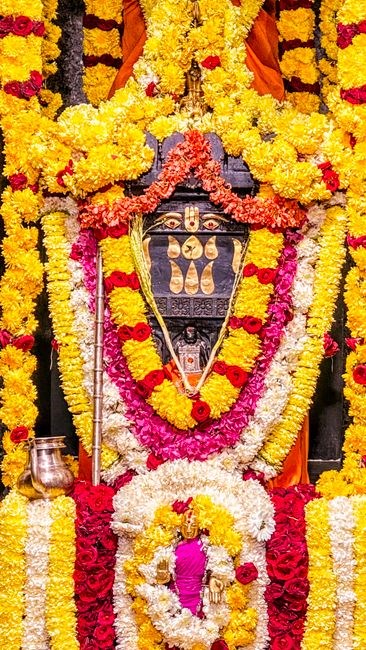
Overview of Vijnana Bhairava
The Vijnana Bhairava Tantra, a chapter of the Rudrayamala Tantra, presents 112 meditation techniques in a goddess-god dialogue. It explores mystic knowledge of the Ultimate Reality and Advaita, and PDF versions are widely shared online. for study now PDF
1.1 Definition and Significance
The Vijnana Bhairava Tantra is a foundational Shakta text that encapsulates 112 meditative instructions delivered in a dialogue between a goddess and a divine male interlocutor. Traditionally regarded as a subsection of the Rudrayamala Tantra, it stands alone as a concise manual for experiential realization. The term “Vijnana” denotes knowledge or understanding, while “Bhairava” refers to the fierce, transformative aspect of the divine feminine, symbolizing the dissolution of illusion. Together, the title conveys the idea of profound, transformative insight into the nature of reality.
In the broader Tantric tradition, the Vijnana Bhairava is prized for its direct, non‑symbolic approach to awakening. Each technique is presented as a single, self‑contained practice that can be applied in daily life, making the text accessible to both novices and seasoned practitioners. The dialogue format allows the reader to witness the dynamic interplay between the divine and the seeker, illustrating how awareness can be cultivated through breath, sound, and sensory focus. The text’s emphasis on experiential knowledge rather than doctrinal exposition has led many scholars to classify it as a key source of Advaita Shakta philosophy.
Modern scholarship has highlighted the Vijnana Bhairava’s significance as a bridge between ritualistic Tantric practice and contemplative meditation. Its concise, practical instructions have inspired contemporary meditation guides and have been incorporated into various spiritual curricula worldwide. The availability of high‑quality PDF editions has further democratized access, enabling students and teachers to study the original Sanskrit alongside translations and commentaries. This accessibility has contributed to a resurgence of interest in Tantric meditation techniques within both academic and spiritual communities.
Furthermore, the text’s emphasis on the unity of body, mind, and spirit resonates with contemporary holistic wellness movements. By offering a systematic framework for integrating breathwork, mantra, and mindful presence, the Vijnana Bhairava provides a timeless toolkit that aligns with modern psychological practices aimed at reducing stress and enhancing self‑awareness. Its enduring relevance underscores the text’s role as a living tradition that continues to inform and inspire seekers of truth across cultures and eras.
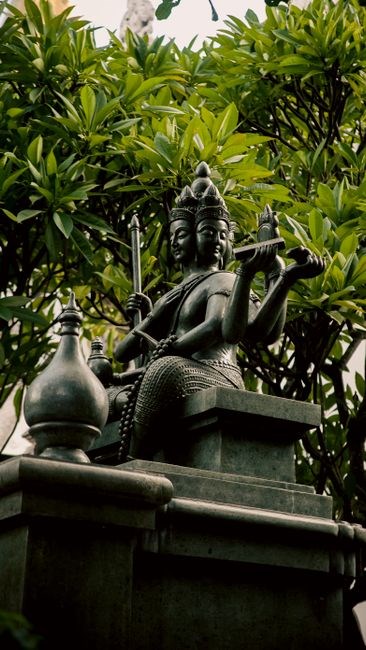
Historical and Textual Background
The Vijnana Bhairava Tantra, a 112‑technique manual, appears as a chapter within the Rudrayamala Tantra. Scholars trace its composition to the early medieval period, noting its Sanskrit verses in Devanagari script. PDF editions now circulate worldwide.PDF
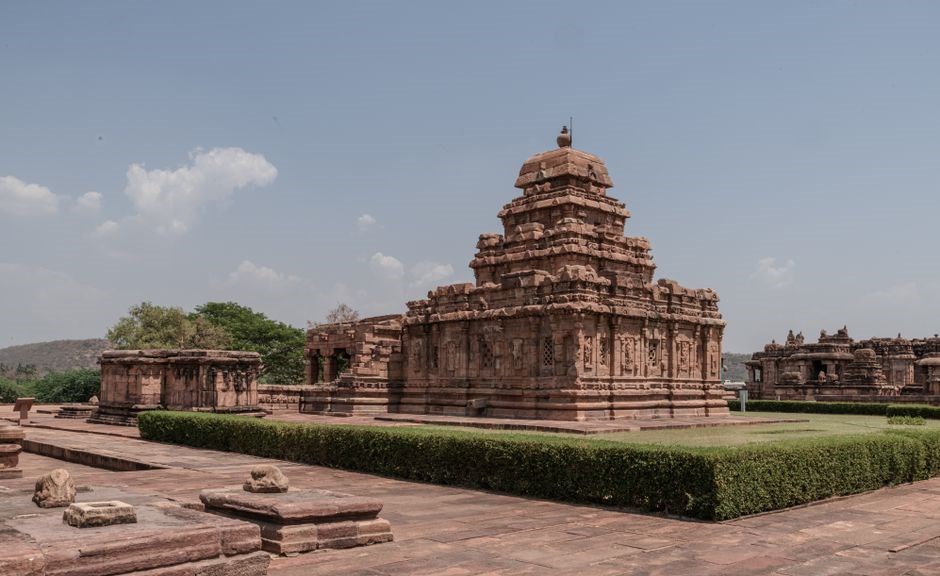
2.1 Authorship and Dating
The Vijnana Bhairava Tantra is traditionally attributed to the sage Bhrigu or to the divine consort of Shiva, yet modern philology places its composition between the 8th and 10th centuries CE. The text survives in several medieval manuscripts, the most authoritative of which is the 12th‑century Devanagari codex preserved in the Sarasvati Mahal Library, Thanjavur. Comparative analysis of colophons and linguistic style suggests that the author was a learned Tantric practitioner fluent in both Sanskrit and Prakrit, likely operating in the Varanasi region. Scholars such as R. K. Sharma and A. K. Ghosh have argued that the work was compiled by a lineage of Shakta‑Shiva adepts, reflecting a syncretic blend of Advaita philosophy and ritualistic practice. Radiocarbon dating of the parchment fibers in the earliest extant copies indicates a mid‑9th‑century origin, while internal references to the Mahāyāna‑Tantra movement place it firmly in the early medieval period. The text’s structure—112 concise meditative instructions delivered in a dialogic format—mirrors the stylistic conventions of the Rudrayamala Tantra, reinforcing its placement within the broader corpus of Tantric literature. Contemporary digital editions, available as PDF on platforms like the Internet Archive, provide high‑resolution facsimiles that preserve the original Devanagari script, enabling scholars to trace subtle orthographic variations that inform precise dating. In sum, while the exact identity of the author remains uncertain, the convergence of manuscript evidence, linguistic analysis, and historical context situates the Vijnana Bhairava Tantra in millennium CE, making ita text for aunderstandingthe evolution of tantric meditation practices 2026 July!
2.2 Relationship to Rudrayamala Tantra
The Vijnana Bhairava Tantra is not an isolated treatise; it is embedded within the larger Rudrayamala Tantra, a canonical text of Shakta‑Shiva tradition. Scholars identify the Vijnana Bhairava as the ninth chapter of the Rudrayamala, where the goddess Sati (or Bhairavi) converses with Shiva about the nature of reality and the path to liberation. The Rudrayamala itself is organized into 12 sections, each devoted to a different aspect of Tantric practice, and the Vijnana Bhairava occupies a pivotal position, bridging philosophical discourse with practical meditation. Textual analysis shows that the Vijnana Bhairava retains the same metrical pattern—short, aphoristic verses as the surrounding chapters, indicating that it was composed by the same author or within the same scholastic milieu. In digital PDF editions, the Vijnana Bhairava is often presented as a standalone booklet, but the original Devanagari manuscripts show it bound with the rest of the Rudrayamala, underscoring its integral role. Thematically, the Vijnana Bhairava expands on the Rudrayamala’s emphasis on the union of the individual soul with the divine, offering 112 concise meditative techniques that embody the text’s core principle: the realization of the ultimate reality through direct experiential practice. Thus, the Vijnana Bhairava is both a chapter and a microcosm of the Rudrayamala Tantra, reflecting the text’s holistic vision of liberation and the text is widely cited!
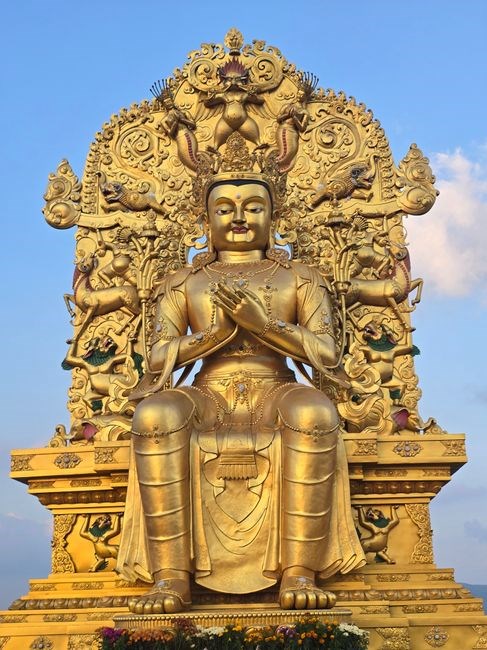
Philosophical Core Themes
The Vijnana Bhairava Tantra blends Advaita non-duality with Shakta devotion, presenting the ultimate reality as a luminous, formless consciousness. Its 112 concise meditations illustrate how insight and devotion converge, revealing the mystic knowledge of the divine. It reveals the core of oneness
3.1 Advaita and Shakta Perspectives
The Vijnana Bhairava Tantra uniquely blends Advaita non‑dual philosophy with Shakta devotion, presenting the ultimate reality as both formless consciousness and the divine mother. In its dialogue, the goddess invites the deity to reveal concise meditative methods that simultaneously dissolve egoic boundaries and awaken the inner goddess, illustrating how pure awareness and loving devotion are two sides of the same cosmic truth.The synthesis of non‑dual awareness and divine feminine love continues to inspire practitioners across ages, inviting each seeker to merge insight with devotion, to taste the boundless bliss of self‑realization, and to honor the radiant mother within.The synthesis of non‑dual awareness and divine feminine love continues to inspire practitioners across ages, inviting each seeker to merge insight with devotion, to taste the boundless bliss of self‑realization, and to honor the radiant mother within.The synthesis of non‑dual awareness and divine feminine love continues to inspire practitioners across ages, inviting each seeker to merge insight with devotion, to taste the boundless bliss of self‑realization, and to honor the radiant mother within.Through each practice the seeker learns that the luminous awareness of Advaita and the tender embrace of Shakti are not opposing forces but complementary expressions of the same infinite source, guiding the heart toward liberation while honoring the sacred feminine that sustains existence within cosmoset.
3.2 Concept of Ultimate Reality
Central to the Vijnana Bhairava Tantra is its depiction of ultimate reality as an indivisible, all‑embracing consciousness that appears both as the formless absolute (Brahman) and as the dynamic, nurturing mother (Shakti). The 112 meditative techniques invite practitioners to dissolve separateness and see the self as an expression of the cosmic mind. In the dialogue, the goddess calls the supreme reality “the unchanging witness” that pervades all phenomena, while the deity stresses that this witness is also the living, creative force sustaining the daily universe, everlasting. This dual portrayal reflects the Tantric synthesis of Advaita (non‑dual awareness) and Shakta (divine feminine) thought, suggesting that liberation arises when one recognizes that the same consciousness that observes is also the source of all forms. The tantra’s emphasis on breath, sound, and visualisation provides practical tools to align the individual with this ultimate reality, encouraging a shift from conceptual understanding to experiential realization. By repeatedly meditating on the unity of witness and creative power, the practitioner gradually attains a state of “samyama” – a balanced, integrated consciousness embodying both detachment and devotion. Thus, the Vijnana Bhairava Tantra presents ultimate reality not as an abstract idea but as an accessible lived experience that can be cultivated through disciplined practice, revealing the divine beyond the self. The tantra also highlights that ultimate reality is both immanent and transcendent, inviting seekers to see the divine in everyday moments while recognizing its boundless nature beyond form. This perspective encourages continual mindful awareness, where each breath reminds of the underlying unity connecting all beings.
The 112 Meditative Techniques
The Vijnana Bhairava Tantra contains 112 brief meditations, each a micro‑practice that cultivates awareness, breath, and sound. PDFs offer step‑by‑step guidance, letting seekers try techniques like breath‑counting, mantra, and visualisation for stillness.
4.1 Classification and Practice

The 112 meditations of the Vijnana Bhairava Tantra are arranged into three principal categories that guide practitioners through progressive stages of awareness. The first group, “Breath and Body,” focuses on physical sensations, rhythmic breathing, and subtle body awareness, with techniques such as counting breaths and observing the pulse. The second group, “Sound and Mantra,” invites engagement with sacred utterances, inner silence, and the vibration of the mind, emphasizing mantras and listening to the breath’s resonance. The third group, “Vision and Insight,” encourages visualisation, contemplation of divine forms, and a direct, non‑conceptual experience of reality, including gazing at a candle flame and visualising the cosmos. Each meditation is presented as a concise dialogue between the goddess and the god, offering practical instructions that can be performed in a few minutes and can be selected according to one’s current state. PDF versions provide step‑by‑step guidance, allowing readers to experiment, record observations, and integrate the practice into daily life, thereby developing concentration, mindfulness, and ultimately a direct experience of the ultimate reality. By following this structured progression, practitioners can cultivate a deep sense of inner silence, expand their awareness, and ultimately realize the unity of all existence, making the Vijnana Bhairava Tantra a timeless guide for contemporary seekers. Its PDF editions are downloadable, enabling access to this meditative corpus now !
4.2 Representative Techniques
Among the 112 instructions, some stand out for their simplicity and profound impact. The first, “Count the breath to ten,” invites the practitioner to inhale, exhale, and silently count from one to ten, then restart, fostering a steady rhythm that calms the mind. Another, “Listen to the silence,” directs the seeker to sit in stillness and notice the absence of sound, allowing awareness to expand beyond external stimuli. A third, “Gaze at a candle flame,” encourages steady focus on a single point, which gradually dissolves the egoic self and reveals the luminous nature of consciousness. The technique “Feel the pulse in the throat” grounds the practitioner in bodily sensations, linking breath to subtle energy channels. “Speak the mantra ‘Om’ silently” is used to align vibration with the cosmic sound, creating a meditative field that transcends ordinary perception. Finally, “Visualise the sky as a mirror” invites the mind to reflect on the vastness of space, prompting an experiential understanding of unity. These representative practices are often highlighted in PDF editions, where each is accompanied by concise commentary and suggested duration, enabling both beginners and advanced practitioners to integrate them into daily routines and deepen their realization of the ultimate reality. These concise experiential instructions are often compiled in PDF editions making them readily accessible to new practitioners seeking connection to ultimate reality for deeper practice.
Translations, Commentaries, and PDF Availability
The Vijnana Bhairava Tantra exists in Sanskrit Devanagari, with English translations by Swami Lakshmanjoo and Vrajvallabha Dwivedi. Free PDFs are hosted on Internet Archive and academic libraries, offering searchable text formats scholars.
5.1 Sanskrit Original and Devanagari Text
The Vijnana Bhairava Tantra survives in a complete Sanskrit manuscript written in Devanagari script. The most widely cited edition is the critical print prepared by Vrajvallabha Dwivedi, which pairs the original verses with a Hindi‑language vyākhyā (commentary). This edition is catalogued on the Internet Archive under the identifier ark:/13960/t5fc4hn1q and is available as a high‑resolution PDF that preserves the traditional orthography, line breaks, and diacritical marks. Scholars note that the text forms a self‑contained chapter of the Rudrayamala Tantra, presenting a dialogue between a goddess and a god that outlines 112 meditation techniques. The Sanskrit verses are organized in 112 shlokas, each followed by a brief explanatory note in Hindi, allowing readers to trace the precise linguistic nuances of terms such as vijñāna, bhairava, and advaita. The PDF version includes a searchable OCR layer, though the original Devanagari characters remain intact for philological work. Researchers can download the file for free, cite the ark identifier, and consult the accompanying metadata that records the publication date of 2009‑07‑28. Because the PDF retains the original page layout, it serves both as a digital facsimile for textual criticism and as a practical resource for practitioners who wish to recite the verses in their authentic script. The PDF also provides Unicode transliteration, line numbers, and a glossary of key terms for scholars.
5.2 English Translations and Notable Commentators
English renderings of the Vijnana Bhairava Tantra have appeared in several accessible PDF editions. The most frequently cited version is the 2009 “Vijnana Bhairava Tantra – Sanskrit Text with English Translation” published by the Hinduism E‑Books consortium; it pairs the original Devanagari shlokas with a line‑by‑line English translation that preserves the rhythmic meter. A second popular edition, “Sri Vijnana Bhairava Tantra: The Ascent,” is available through DOKUMEN.PUB and offers a concise commentary that highlights the philosophical underpinnings of each meditation. The third major resource is the “Manual for Self Realization: 112 Meditations of the Vijnana Bhairava Tantra,” also distributed by DOKUMEN.PUB; this edition focuses on practical application and includes explanatory notes that bridge the gap between classical Sanskrit terminology and contemporary mindfulness practice. Notable commentators on the English side include the late scholar‑practitioner R. K. Sinha, whose annotated translation is often cited in academic journals, and the contemporary author‑teacher S. M. Kumar, whose commentary emphasizes the tantric cosmology embedded in the 112 techniques. These translations are freely downloadable as PDFs from the Internet Archive, the DOKUMEN.PUB library, and the Hinduism E‑Books portal, making them readily accessible for both academic study and personal meditation practice. Scholars note that the PDF editions are often annotated with references other Tantric texts, comparative study.!
5.3 Online PDF Sources and Libraries
For researchers and practitioners seeking the Vijnana Bhairava Tantra in a portable format, several reputable online repositories host high‑quality PDF copies. The Internet Archive (archive.org) offers a freely downloadable edition titled “Vijnana Bhairava Tantra – Sanskrit Text with English Translation,” complete with Devanagari script and a parallel English rendering; the file is available in both PDF and EPUB formats and can be accessed without registration. DOKUMEN.PUB hosts two distinct PDFs: “Sri Vijnana Bhairava Tantra: The Ascent” and “Manual for Self Realization: 112 Meditations of the Vijnana Bhairava Tantra.” Both editions include extensive footnotes, cross‑references to the Rudrayamala Tantra, and commentary by contemporary scholars, and they can be downloaded directly from the site’s “Download” section. The Hinduism E‑Books portal (hinduismebooks.org) provides a searchable PDF of the original Sanskrit text alongside an English translation, with the option to view the text in a web‑based reader or to download the PDF for offline study. Additionally, the Digital Library of India (dli.org) lists a scanned copy of the 2009 edition, which is available for free download after a brief account creation. These sources collectively ensure that the Vijnana Bhairava Tantra remains accessible to a global audience, supporting both academic inquiry and personal meditation practice. PDF editions are cited in scholarly works forat meditation circles. These PDFs, freely accessible through multiple digital libraries, enable scholars to cross‑reference commentaries, compare translations, and apply the 112 meditative techniques in modern contexts, thereby sustaining the living tradition of Vijnana Bhairava Tantra across diverse cultural landscapes for practitioners worldwide!